
The Singing Bone
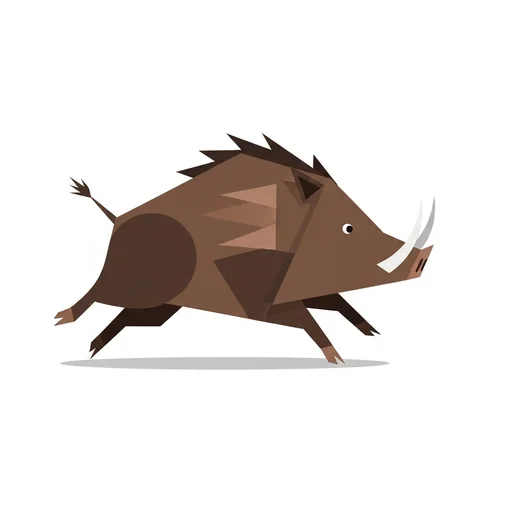
Once, in a far-off kingdom, a wild boar roamed the forests and fields. It tore up gardens, chased travelers, and frightened everyone who lived nearby. The king grew worried for his people and made a promise: “Whoever slays the boar shall marry my daughter, the princess, and share half my kingdom.”
Two brothers heard the king’s proclamation. The elder brother was strong and proud. “The princess and half the kingdom will be mine,” he said, tightening his belt and setting off at once, spear on his shoulder. The younger brother was gentle and thoughtful. He waited until evening, then took the quieter path into the woods.
As the younger brother walked under tall, whispering trees, he met a small, gray-bearded man who stepped out from behind a trunk. The man’s eyes were kind but keen. “I know why you have come,” he said softly. “Take this black spear. If you are brave and careful, one true throw will bring the boar down.”
The younger brother bowed. “Thank you,” he said. He went on with steady steps. Before long, the boar burst from the bushes, bristles raised and eyes blazing. The younger brother did not shout or boast. He stood firm, aimed truly, and cast the black spear. With a thump, the spear struck, and the terrible beast fell.
He whispered, “For the peace of the kingdom,” and pulled the spear free. Then he lifted the boar—heavy but still bearable—and began the long walk home. The sun had dipped low, and the river beside the road shone red and gold. To cross the water, he came to a narrow bridge of worn stones.
At that very moment, the elder brother stumbled out of the woods. He had hunted all day and had not even seen the boar’s shadow. When he spotted his younger brother carrying the beast, his heart burned with jealousy.
“Brother!” the elder cried, forcing a smile. “You have done it! Come, you must be tired. Let us rest by the bridge and drink from the river.”
The younger brother set down the boar. “A short rest would be good,” he agreed. He knelt to cup the water in his hands. But the elder brother’s envy had grown into something dark and terrible. He looked around—the road was empty, the river murmured, and no one was near.
He did a dreadful thing. He struck his own brother and hid him beneath the bridge, where reeds and shadows would keep the secret. Then he lifted the boar, walked straight to the king’s hall, and claimed the victory as his own.
The people cheered the elder brother. The king kept his promise: the elder brother married the princess, and he was praised as a hero. No one spoke the younger brother’s name, for no one knew where he had gone. Only the bridge and the river knew.
Time passed. The kingdom was peaceful again. One bright day, a shepherd brought his flock to graze along the riverbank. When he sat upon the bridge to rest, he saw something white lodged between the stones below—a small, smooth bone, pale as milk. He picked it up, turning it in his hands. It was just the right shape for the mouthpiece of his horn.
The shepherd carved it carefully, polished it, and fitted it to his horn. Then he lifted the horn to his lips and blew. A strange, sweet sound rose into the air—so clear and pure that the sheep lifted their heads. The shepherd played again. This time, the horn seemed to sing words all by itself:
“Blow, blow, shepherd, on my bone, My brother slew me all alone. Under this bridge my bed was laid— He took the prize, my life he paid.”
The shepherd’s hands trembled. He stopped, then tried once more. The horn sang the same sorrowful song. “This is no ordinary music,” he said, paling. “The king must hear it.”
He hurried to the palace. When he told the guards what the horn had sung, they led him to the great hall. The king and the princess sat on their thrones. Courtiers gathered, curious. The shepherd bowed low. “Your Majesty,” he said, “hear what my horn will sing.”
He raised the horn and blew. The same clear voice filled the hall:
“Blow, blow, shepherd, on my bone, My brother slew me all alone. Under this bridge my bed was laid— He took the prize, my life he paid.”
The king stood, his face grave. “Under which bridge?” he asked.
“The narrow stone bridge by the river,” the shepherd replied. “That is where I found this bone.”
At once the king sent his guards and the court servants to the river. They lifted stones and pulled away reeds. Beneath the bridge, they found the rest of a poor, forgotten skeleton. The bones were gathered gently and carried to the palace. The shepherd fitted the bone to his horn once more and played before the king. The song rang out again, as plain as truth.
The king turned to the elder brother—the man the kingdom had called a hero. He had grown handsomely dressed and well fed, but now he trembled. “What do you know of this?” the king asked.
The elder brother’s eyes darted from the horn to the princess, then to the floor. With the whole court listening, the truth he had buried rose up like the river in a storm. He could not hide. He confessed his terrible deed.
The king’s heart was heavy. He ordered that the elder brother be judged according to the law, and the law’s punishment was the harshest the kingdom allowed. There was no joy in the great hall that day.
As for the younger brother, the king declared he must be honored as the true savior of the land. They laid his bones to rest in a quiet, beautiful place, with flowers and a stone that told his tale. The shepherd placed the singing bone beside him in the grave, and after that, it sang no more.
The princess stood long by the grave, and tears fell for the kind, brave man she had never had the chance to know. The king spoke softly to his people: “Let us remember this: envy grows into evil, and lies cannot stand forever. However long it takes, the truth will find its voice.”
And so the kingdom learned a hard lesson. Courage had won the battle with the boar, but honesty and justice set the kingdom right again. The river flowed on, the bridge held fast, and travelers who crossed it would sometimes pause, look down at the water, and whisper a promise to keep clean hearts and truthful tongues, so that no song like that would ever be needed again.
The end
