
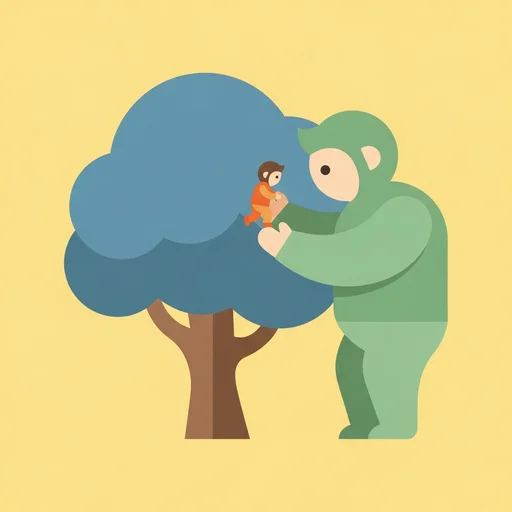
The Selfish Giant
There was once a Giant who owned a beautiful garden. Soft green grass covered the ground, flowers like stars opened their faces to the sun, and twelve peach trees wore pink and pearl blossoms in spring and sweet fruit in autumn. Every afternoon after school, the children slipped in to play. They ran beneath the trees, listened to birds singing in the branches, and laughed as the petals fell like gentle snow.
For seven years the Giant had been away, visiting his friend, the Cornish ogre, and no one minded the children playing. But one day he came home. When he saw the children, his great voice shook the air. "What are you doing here?" he roared, and the children ran away. "My own garden is my own garden," the Giant said. "I will not let anyone else play in it." He built a high stone wall all around and put up a notice board: TRESPASSERS WILL BE PROSECUTED.
The poor children had no place to play now. The streets were narrow and dusty, full of stones that hurt their feet. They would walk beside the wall after school and peer through its cracks. "How happy we were there," they whispered.
Then Spring came to the country. Small birds twittered, little flowers poked up their heads, and trees lifted new leaves. But Spring forgot the Giant’s garden. Snow covered the grass like a white cloak, and Frost painted the trees silver. The North Wind roared around the wall, and Hail rattled on the roof. The Giant sat by his window. "I cannot understand why Spring is so late in coming," he said. He waited and waited, but Winter lived on in his garden. The Autumn months brought no fruit, for the trees thought, "We will not give fruit, for there are no children to eat it."
One morning the Giant heard a sound he had not heard for a long time: a little linnet singing outside his window. He smelled sweet air. "At last Spring has come," he cried, and he looked out. He saw a marvelous sight. Through a small hole in the wall, the children had crept in, and they were sitting in the branches of the trees. Each tree held a child. The trees were so glad to have them back that they had covered themselves with blossoms. Flowers popped up everywhere, and the birds flew about, singing with delight. Only in one corner it was still Winter. A little boy was standing there, too small to reach the branches. The tree bent down as low as it could, but still he could not climb. The poor child cried, and around him the North Wind blew and Hail danced on the grass.
When the Giant saw this, his heart melted. "How selfish I have been!" he said. "Now I know why Spring would not come here. I will put that poor little boy up into the tree, and I will knock down the wall and let the children play here forever."
He crept downstairs and opened the door softly. But the children, seeing him, were frightened. They ran away, and Winter came back to the garden. Only the little boy did not run, for his eyes were full of tears and he did not see the Giant coming. The Giant came up behind him gently, lifted him in his big hands, and set him in the tree. At once the tree burst into blossom, the birds began to sing, and the little boy stretched out his arms and kissed the Giant on the cheek.
When the other children saw that the Giant was not angry anymore, they ran back, and with them Spring returned. "It is your garden now, little children," said the Giant, and he knocked down the wall with a great axe. He put up a new sign: ALL ARE WELCOME TO PLAY. All day long the children played, and in the evening they came to say good-bye.
But the little boy whom the Giant had loved did not appear. "Where is your little friend—the boy I helped into the tree?" the Giant asked. The children answered, "We do not know. We have never seen him before." The Giant was very sad.
Every afternoon the children came to play, and every afternoon the Giant sat with them and grew kind. He loved them all, but he longed for his first little friend. Years passed, and the Giant grew old and feeble. He could no longer run and play; instead, he sat in a great armchair, watching the children with bright eyes. He did many gentle things: he gave a little ladder to one small child, he picked the reddest apples for another, and in winter he let the tiniest ones warm their hands by his fire. The garden was the loveliest in the land, for the children made it happy.
One winter morning, as the Giant looked out, he rubbed his eyes. In the far corner of the garden he saw something wonderful. On a tree there were white blossoms, though it was still winter. Its branches shone like gold, and silver fruit hung down from them. Under the tree stood the little boy he had loved.
The Giant’s heart leapt, and he hurried across the frosty grass. As he came close, his face grew stern. On the child’s hands were small marks, and on his feet, too, as if nails had once made tiny wounds. "Who has dared to hurt you?" cried the Giant. "Tell me, and I will take my great sword and punish him!"
The child smiled at him. "These are the wounds of love," he said softly.
"Who are you?" whispered the Giant, and a strange awe filled him.
"You let me play once in your garden," said the child. "Today you shall come with me to my garden, which is called Paradise." A sweet peace fell upon the Giant’s heart.
That afternoon the children ran in and found the Giant lying under the tree, quite still. His face looked happy and calm, and white blossoms lay all over him like snow. The children covered him with flowers. They kept on playing in the garden, as he had wished, and Spring always came back to the Selfish Giant’s garden, which was selfish no more.
The end
