
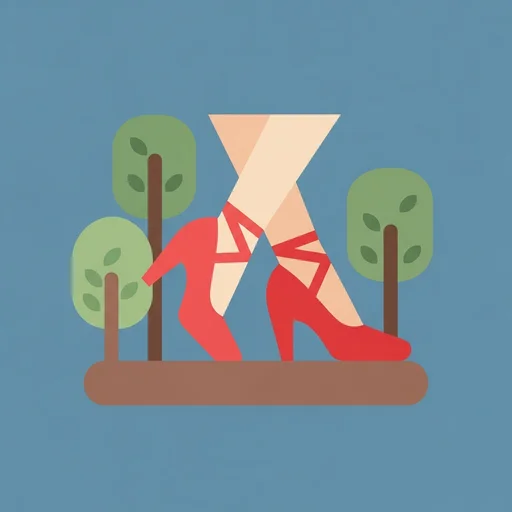
H.C. Andersen
The Red Shoes
Once there was a little girl named Karen. She was very poor and often went barefoot. In winter her feet turned red with cold, and in summer they were dusty and sore. A kind old woman in the village stitched a pair of shoes for her from scraps of red cloth. They were clumsy and not very fine, but Karen loved them because they were hers.
Soon after, Karen’s mother died, and the world felt gray. On the day of the funeral, Karen wore the red shoes because they were the only shoes she had. People whispered that red shoes were not fit for such a sad day, but Karen did not understand. As the small procession passed, a grand carriage stopped. Inside sat a rich, old lady who felt sorry for the lonely girl. She took Karen into her home and decided to care for her as if she were her own.
The old lady was kind and strict. She made sure Karen learned her letters, kept her hair brushed smooth, and wore neat, proper clothes. The old red shoes were burned, and Karen was promised new ones—black and sensible—for church. When Karen was old enough to be confirmed, the old lady took her to the shoemaker. In the window stood a shining pair of red shoes, fine as a rose. The old lady’s eyes were poor. She thought they were black. But Karen knew they were red, and desire pricked her heart like a pin. She pointed to them. The shoes were bought, and on the great Sunday of confirmation, Karen wore them.
People stared. Red shoes in church! The organ played, the hymn rose like wings, but Karen thought of her feet. When she stepped out of the church, an old soldier with a red beard and a crutch winked at her. He tapped her shoes with his cane and said, “What pretty dancing shoes! Keep on dancing!” The words felt like a little spell. Karen blushed, but her feet made a tiny hop all by themselves. In the carriage, the old lady did not notice; her eyes were weak, and she spoke only of behaving well.
After that day, Karen could not forget the shoes. She wore them when she should not. One evening the town held a ball, and though the old lady was sick and needed her, Karen slipped away and put on the red shoes. As she crossed the square, the old soldier appeared and tapped them once more. “Dance you shall,” he whispered. The fiddles began inside the hall, and the shoes began to prance. Karen danced and danced. She tried to stop, but the shoes would not let her. She swirled out of the bright hall, past the church, over cobblestones and fields, through the dark woods and along lonely roads. Night fell, morning came, and still she danced. Her hair tangled, her face grew pale, and tears ran down, but the red shoes held fast.
She danced past a little church where the windows glowed with candlelight. An angel seemed to look out from the doorway. Karen cried, “Please—have mercy!” But the shoes spun her away. In her heart she remembered the old lady and knew she had not been true. At last, exhausted and trembling, she reached the house of the executioner—the man with the heavy axe who was called when laws must be obeyed. “Please,” she begged, “I cannot take off these shoes. Cut them off. Save me.”
The executioner looked at her kindly and said, “I am not asked to free people from dancing, child. But if your heart truly turns away from pride and toward goodness, I will try.” Karen nodded, weeping. Then, because there was no other way, he freed her from the red shoes the only way he could—by taking off her feet. He bound her well and gave her crutches and a pair of wooden feet. And the red shoes, with her small feet still inside them, ran away, dancing over fields and down the road, never growing tired.
Karen learned to walk again, slowly and humbly. She went to the parson’s house and asked to work in the kitchen. She swept floors, washed pots, and read the Bible in the evenings. She sang softly at the window and tried, day by day, to be gentle and good. She wished only for a quiet heart.
On Sunday she longed to go to church. She dressed plainly and set out on her crutches. But at the church door the red shoes appeared—without a girl to wear them—turning and bowing, blocking her way. Karen trembled and went home. Another Sunday she tried again, and again the red shoes danced before her, reminding her of her pride. She prayed, “Dear God, help me. Teach me to love what is right more than anything bright.” From then on, Karen stayed at home on Sundays and listened to the church bells from afar. She cared for the children of the parson and comforted the sick who came to the door. Her heart grew quiet and kind.
One day the bells rang sweeter than ever. Sunlight filled the small room where Karen sat, and she felt no more weight in her chest—only lightness, like singing wind. “Now,” she whispered, “now I would so love to be in church.” And in that moment, it was as if the walls opened and the organ’s music washed through her. Her face shone, and she smiled. She bowed her head, and her tired heart grew still.
People said the bell ropes rang by themselves that day. They carried Karen to the church and laid her under the kind, cool stone. The old soldier with the red beard was not seen again. The red shoes never danced at the door anymore. And in Heaven, where no one asks what you wore, Karen’s soul stood in pure joy, light on its feet at last, as if she had always known the right steps.
Those who remembered her told their children: Pride can pull you faster than your own feet. But a humble heart learns the truest dance—one that no shoe controls.
The end
